YAT Career Studio
The gap is not aspiration. It is the personalised support to discover who you are, navigate the options and progress into work. Career Studio is our AI career guidance platform for that, from Grade 8 to a first job, particularly for young people from underserved communities.
From uncertainty to informed action
When young people, particularly in marginalised communities, are exposed early and consistently to diverse and relevant career pathways, they are better equipped to make informed decisions. Over time, that builds a more inclusive, better-prepared, high-potential talent pipeline.
What we do
Career Studio: self-discovery, planning, exposure and navigation
Short-term outcome
Enhanced career understanding
Medium-term outcome
Learners adopt behaviours that improve career pathway alignment
Impact
Young people navigate career pathways better, and succeed in their careers
What we believe
Multiple career pathways
There are diverse career pathways available to learners, and success is not limited to obtaining a university degree. Traditional academic routes, vocational training, emerging fields and entrepreneurship all offer viable and equally valuable pathways to meaningful employment.
Equal value of pathways
These different pathways should be recognised and promoted as equally important, so that learners are empowered to pursue options that align with their interests, strengths and contexts.
Young people navigate career pathways differently
Learners enter and navigate these pathways at different stages of their educational journeys. Career decision-making is not a one-time event but an evolving process.
Stage-appropriate exposure
Meaningful career exposure must be provided at multiple points in a learner’s life. Early, continuous and relevant exposure to different careers and pathways is critical to informed decision-making.
Informed choice leads to better outcomes
Learners who understand the range of career opportunities available to them are more likely to make informed choices, select suitable pathways and succeed in their chosen careers.
Four functions at every decision point
Self-discovery, personalised planning, real-world exposure and opportunity navigation, from subject choice in Grade 8 to a first job.
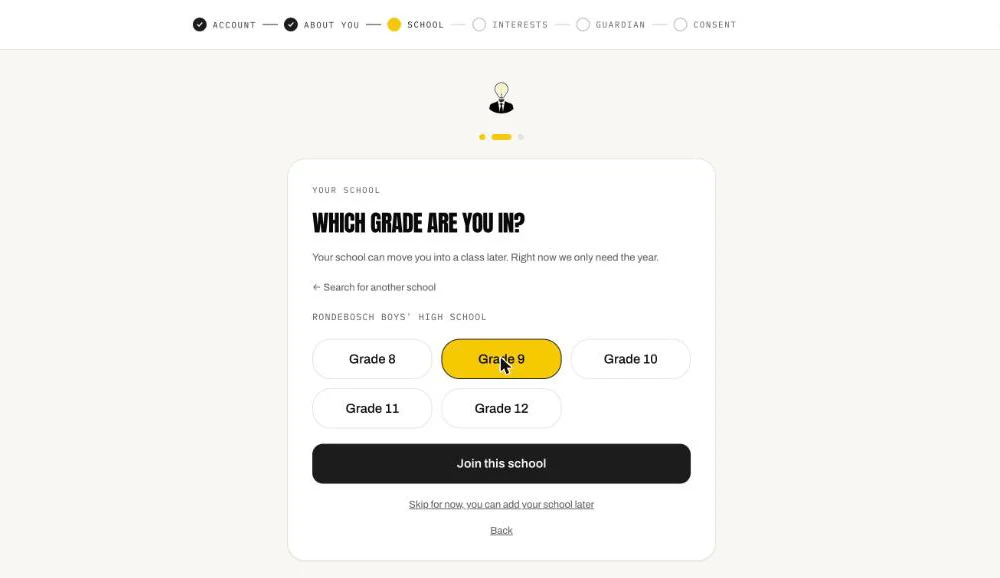
Self-discovery
Who am I, and what fits me?
A short interest assessment on the Holland (RIASEC) codes behind O*NET, written for each grade, starts a profile of interests, strengths and work preferences. Everything else on the platform is personalised from it.
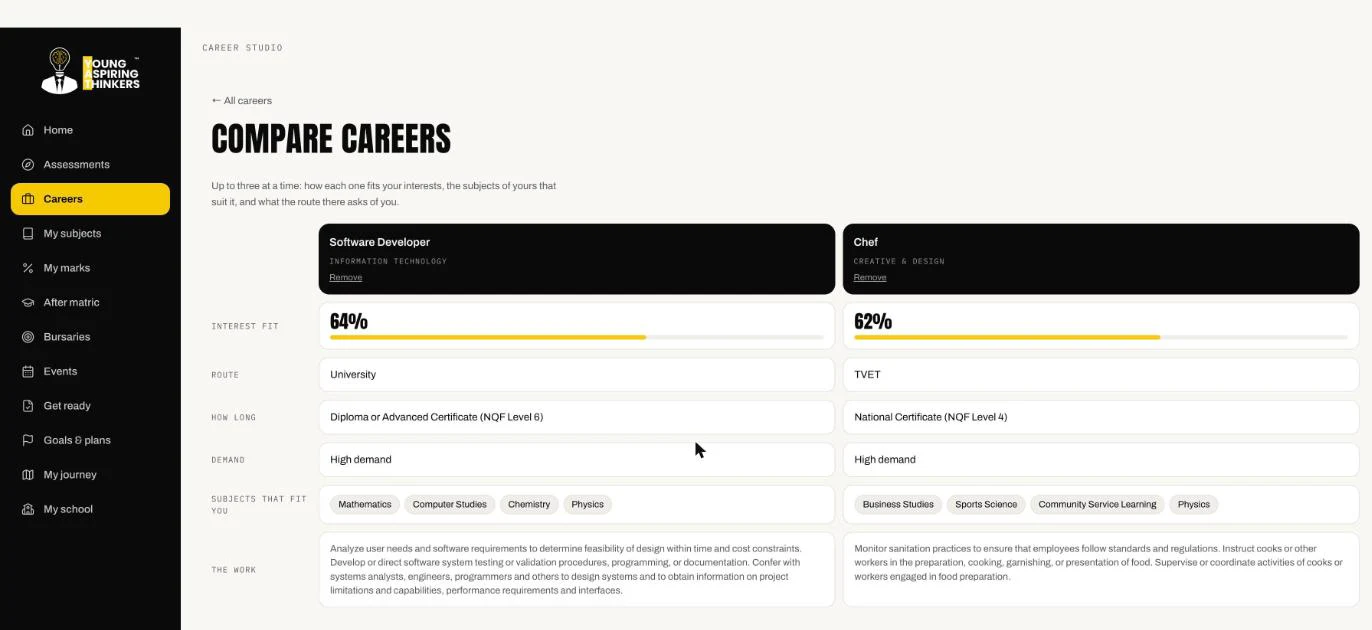
Personalised planning
Which careers, and how do I get there?
Careers matched on that profile’s interests and values, compared side by side with the subjects and marks each one needs. A learner who names a route, such as TVET or an apprenticeship, gets a row of careers with a confirmed way in.
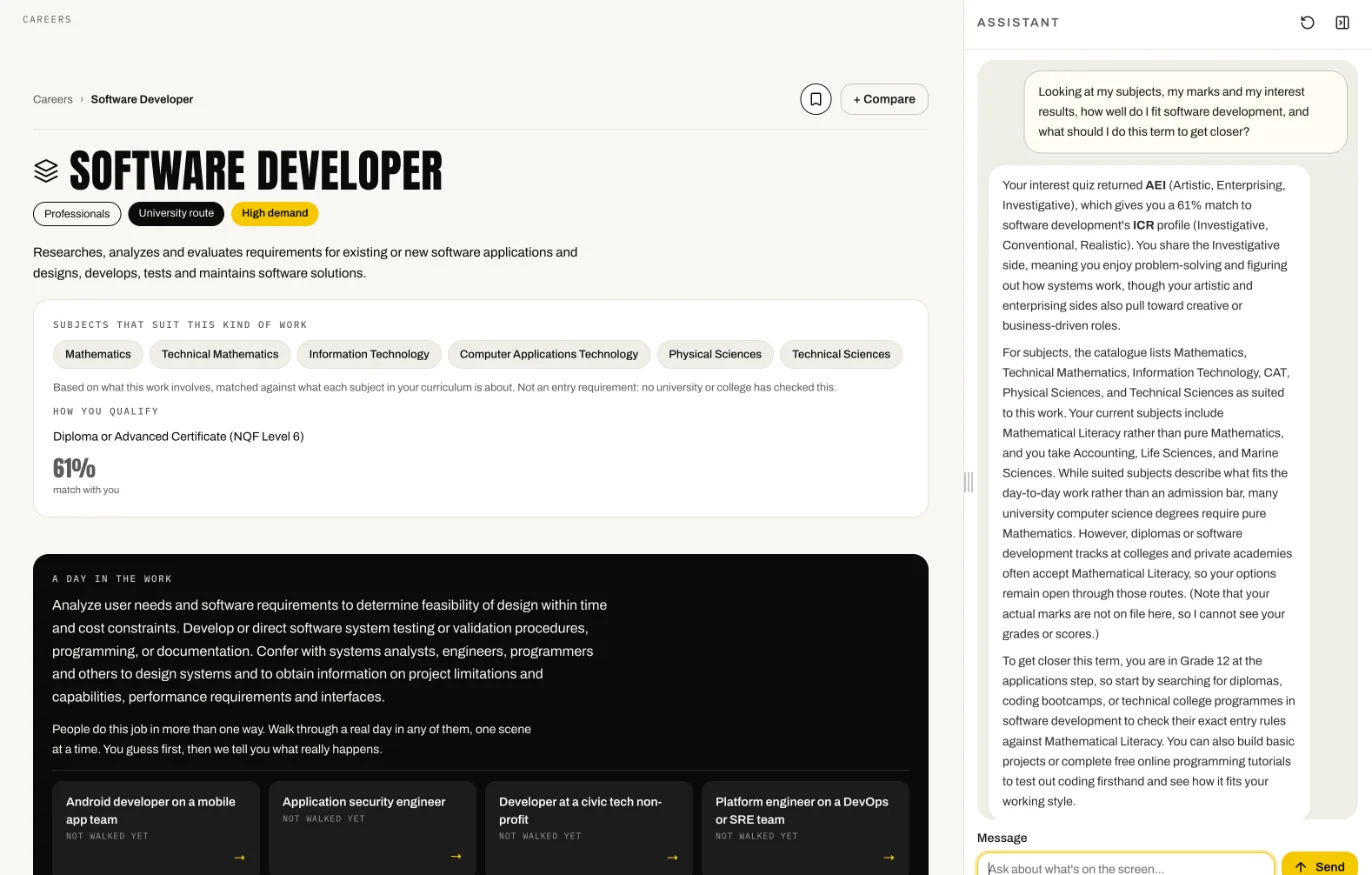
Real-world exposure
What is the job really like?
Career days and mentors with real professionals where a visit is possible, a simulated day in the job where it is not, and an AI career guide to ask about responsibilities, qualifications and pay for any career.
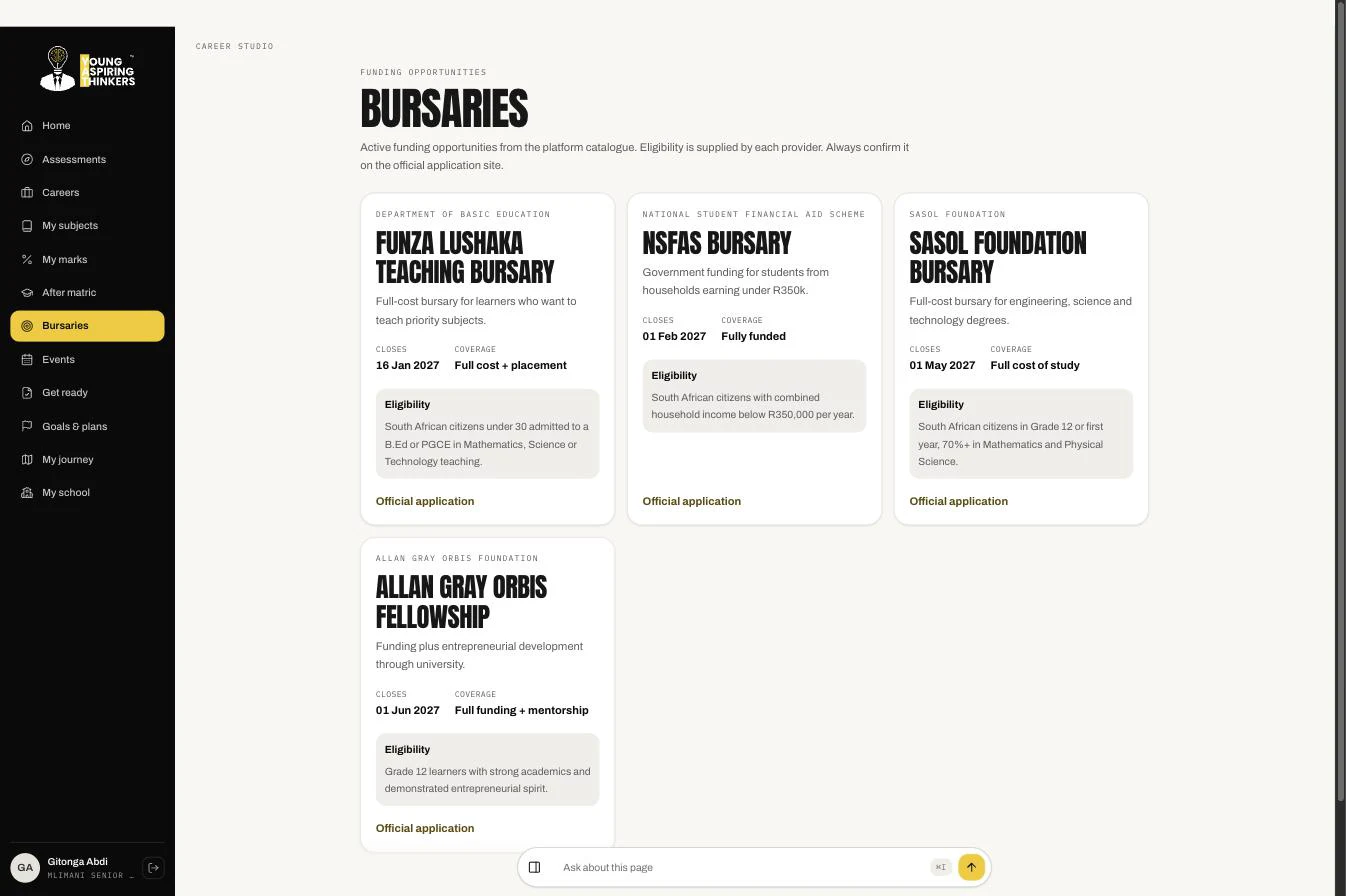
Opportunity navigation
What can I apply for, and what do I do next?
Every career opens into the pathway behind it: subjects, entry requirements checked against real marks, universities, TVET colleges, learnerships, bursaries and NSFAS, and the next action to take this term.